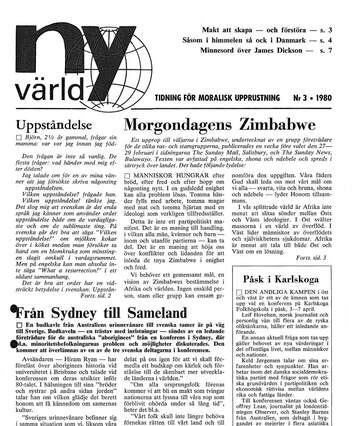
James Dickson (1899–1980)
James Dickson was a Swedish Member of Parliament and Chamberlain to the King of Sweden. His full name was James Iwan Axel Dickson, and he was born in Gothenburg on 18 March 1899. He passed his school-leaving examination at Lundsberg boarding school in 1917, gained an international flying certificate the same year, and joined the Swedish Army Air Force in 1920. He graduated as an agronomist from Alnarp in 1923 and then travelled widely in Europe, North America, Asia and Africa.[1]
During the Winter War of 1939–40 he served as a captain in the Finnish Army,[1] and he also volunteered in Norway after the German invasion in 1940.[2] He was appointed chamberlain in 1940, and during the Second World War he led the group of C-byrån, the Swedish foreign intelligence service, that covered the provinces of Jämtland and Härjedalen. From 1941 to 1968 he sat in the Riksdag's lower house for the conservative Right party, and he also held local offices and sat on the county council. He became a minor legend in parliament when he brought a grass snake his children had rescued into the chamber, and the character "Snoke-Dicke" in the children's book Barna Hedenhös blir kungliga (1954) is based on him.[1]
He was one of the European politicians most closely involved with Moral Re-Armament after the Second World War. He was a member of the Council of Europe from 1949 to 1956,[1] and he took part in the Ecumenical Commission for European Cooperation, later renamed the Committee on Christian Responsibility for European Cooperation.[2] A 1952 photo taken in Caux shows him with Fred Copeman and the Danish politician Ole Bjørn Kraft. In 1957 he was in Strasbourg with Kraft, the German refugees minister Theodor Oberländer and the former French reconstruction minister Eugène Claudius-Petit.
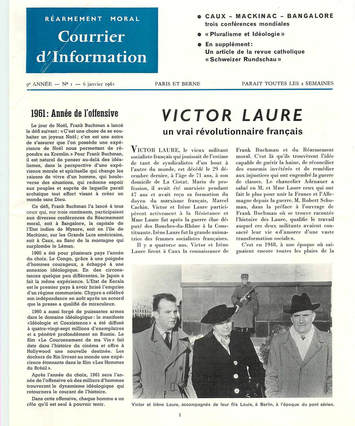
He wrote about Sweden's choices in the booklet Sverige vid skiljevägen (1955), which was also published in German as Etwas völlig Neues and in English as Something completely new. He spoke at Caux meetings in 1958, 1964 and 1969. In 1961 he attended Frank Buchman's funeral in Allentown, and the Swedish weekly Veckojournalen ran an article about him the same year.
His work took him well beyond Europe. Photos show him in Nigeria with the Ewi of Ado Ekiti and with Oba Akisanya, the Odemo of Ishara, alongside Rajmohan Gandhi. They also show him in India, at Panchgani with Maruthi Yadev and at an Indian airport with Jan Franzon. In 1967 he spoke after a performance of "Anything to Declare?" in Stockholm, Sweden. In 1973 and 1974 he attended MRA conferences for politicians, and in 1974 he joined a group from Caux on a visit to the Swiss Parliament in Bern.
Outside politics he was president of the Gothenburg Rotary Club in 1939–40, chaired the Swedish Association of Conscript Officers and the Sweden-Finland Society, and chaired the boards of the British Factory in Gothenburg and the brewery AB Pripp & Lyckholm. His honours included Commander of the Swedish Order of the Polar Star and Commander of the Norwegian Order of St. Olav. He married Vanja Bergh in 1923, and they had four children: Maud, Marianne, Birgitta and Archibald. He died in Alingsås on 6 March 1980.[1]
External sources
- Wikipedia, accessed on 15/10/2026
- Blueprints of Hope, Utrecht University, accessed on 15/10/2026