
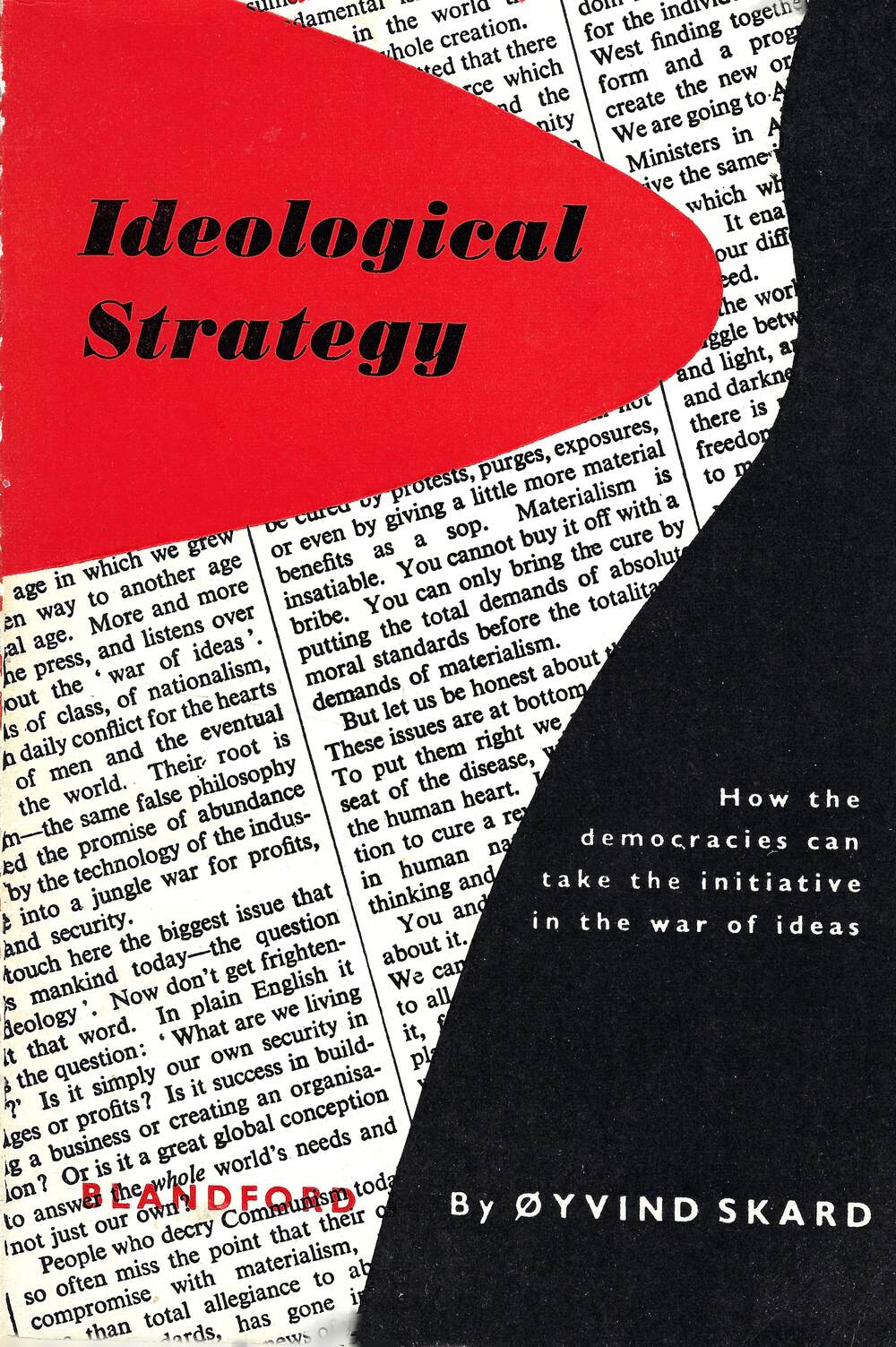
Has democracy the strength to defend itself? Can it now and in time to come count upon citizens who feel deeply and personally committed to the ideas which underlie democracy? And can democracy take the offensive? Has it the ideological power to win the peoples now subject to totalitarian governments?
This is the burden of the author's enquiry and he is well qualified to make it. Dr. 0yvind Skard was a member of the Norwegian Government's committee on psychological warfare and defence. He has made a very thorough study of the ideological situation and trends in the world today. After the Committee issued its report, he published a supplementary statement dealing with the considerations on which his personal contribution to the report was based.
As this is of importance to anyone interested in the world-wide ideological conflict, it is now published in English. Dr. Skard is President of the Norwegian National Committee for Mental Health.
When Norway was occupied by the German forces he was arrested and sent to a special concentration camp for ,educationalists whom the Nazis considered ‘particularly dangerous’. For some years he was a lecturer at Oslo University and is now a consultant in industrial psychology.
He says that failure to understand the reasons why ideologies exist, the power they have, and the ways in which they operate, is the gravest of the dangers facing democracy. Democracy's one chance of winning the war of ideas is to have a clear moral ideology which is accepted as binding both upon the individual and society.
英語